
Estimate source: LSEG
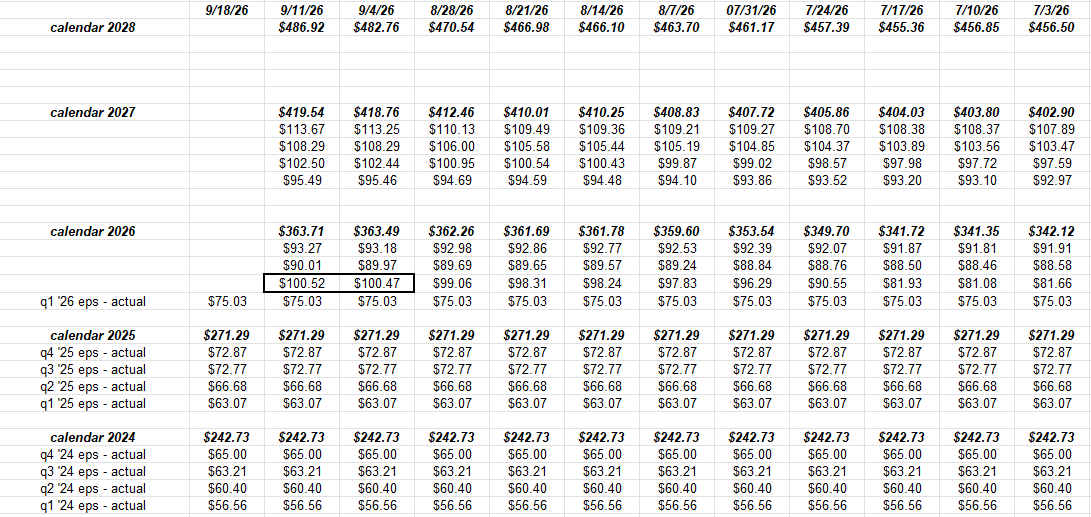
The above spreadsheet table is from an internal SP 500 EPS spreadsheet maintained since the end of the so-called “great financial crisis” in 2008.
Note the heavily-bordered EPS estimates for Q2 ’26: those are the first quarterly, “$100 EPS estimates” ever for the SP 500.
With just two weeks left in the 2nd quarter, ’26 reporting and about 4 weeks from the beginning of the 3rd quarter ’26 earnings releases for the SP 500, it’s remarkable the growth in the benchmark estimate, and it’s probably not sustainable.
The 2nd quarter EPS reports were heavily influenced by the Anthropic mark-up, with LSEG reporting the last few weeks that Anthropic added 15% to 2nd quarter ’26 EPS growth, which doesn’t include tariff refunds, etc.
In Q1 ’26, the SP 500’s +26% EPS growth y-o-y, was thought to be boosted 7% by the Anthropic mark-up.
What surprised me further about the SP 500 EPS data is that the expected SP 500 EPS estimate by year-end ’26 (as of last weekend) is $363.71, versus the actual EPS estimate as of the end of ’24 of $242.73, which means in just 18 months, the SP 500 EPS estimate has grown 50%.
This blog’s long-term SP EPS growth model assumes a 7% annual EPS growth rate.
Everyone’s talking about a 20x PE on the SP 500 but it seem implausible that the SP 500 can grow EPS like it has for an indefinite duration.
Summary / conclusion: Some of the big banks / brokerage stocks took a beating this week after Bank of America’s CEO, Brian Moynihan noted on Monday of this past week that Q3 ’26 trading results would be “flat”, which is no surprise given the incredible Q2 ’26 results particularly from the equity trading and banking sides of the bank capital markets.
Q2 ’26 was an historic quarter for bank and brokerage equity trading.
I sound like an old curmudgeon having managed client funds for over 30 years, but these SP 500 earnings growth rates, just aren’t sustainable. What’s remarkable is that if we go back and look at the 1995 – 1999 period and the 25% annualized return for the SP 500 over that 5-year period, EPS growth wasn’t anywhere close to the 25% a year.
What’s interesting is that it looks like the semiconductor trade is ready to run again. It may not equal April – May ’26 gallop, but the stocks look to be trading well in a sideways market. You’ll see more commentary on this blog over the weekend.
None of this is advice or a recommendation, but only an opinion. Past performance is no guarantee of future results. LSEG is the source of this blog’s SP 500 EPS and revenue data. None of this information may be updated and if updated, may not be updated in a timely fashion.